



Real-Time Transparency
in Logistics
For a Resilient Supply Chain: Use data-driven, intelligent solutions to efficiently manage processes, reduce costs, and measurably increase customer satisfaction.
In our increasingly globally connected and dynamic world, there are numerous factors that can impact your Supply Chain. To avoid disruptions or even interruptions, you need to be able to respond to these influences dynamically and quickly.
With modern technologies and data-driven, semi-automated control solutions, you can keep track of your Supply Chain, monitor it transparently in real time, and optimize it.
The Importance and Relevance of Real-Time Transparency in Logistics
Does your company rely on globally interconnected Supply Chains? If so, you should be able to respond quickly and flexibly to changes in these Supply Chains. However, this is only truly feasible if you yourself can obtain continuous and reliable insights into the status of your Supply Chain.
Many companies today struggle with fragmented data sources, delayed information, and a lack of overview, which leads to inefficient processes, increased inventory, and dissatisfied customers. Real-time transparency provides a solution.
What is real-time transparency in logistics?
Real-time transparency means the continuous, up-to-date availability of status and movement data along the entire Supply Chain to optimize processes. In other words, it provides a comprehensive, constantly updated overview that enables you to make well-informed and timely operational decisions. Various technologies provide you with a constantly up-to-date overview of your entire Supply Chain—from suppliers through your own Warehousing and production to delivery.
How real-time transparency
is achieved
To obtain this overview, information from various sources must be combined. For example, we rely on data from manually entered sources or from customer systems, and increasingly also on telematics systems and IoT data sources (Internet of Things, such as sensors on individual products or shelves that transmit status information in real time).
All information is consolidated in a central analytics and reporting tool, where it is checked for plausibility and linked together. The tool can then detect whether the current status deviates from the planned steps and enables the necessary corrections—either fully automatically or manually.
“Real-time” means that information is provided in a timely manner—that is, exactly when it is relevant for operational decisions. This allows even complex logistical requirements, such as Just-in-Sequence delivery in networked Supply Chains with many interdependencies, to be reliably met.
Why Real-Time Transparency Is Essential for Your Supply Chain
Only if you can monitor and evaluate the logistics processes along your Supply Chain in real time will you be in a position to identify delays, bottlenecks, or disruptions early on and respond to them in a timely manner. In volatile markets, this is a decisive competitive advantage.
Global crises have exposed vulnerabilities in Supply Chains and highlighted the critical need for end-to-end transparency. According to studies, approximately 90% of Supply Chain controllers therefore consider end-to-end transparency to be business-critical—yet fewer than one-third of companies have the capabilities to reliably monitor these processes.

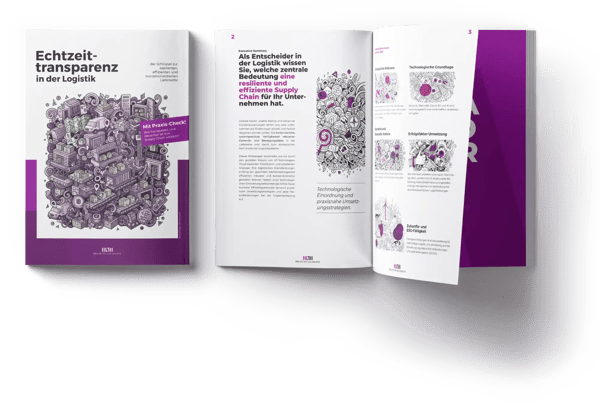
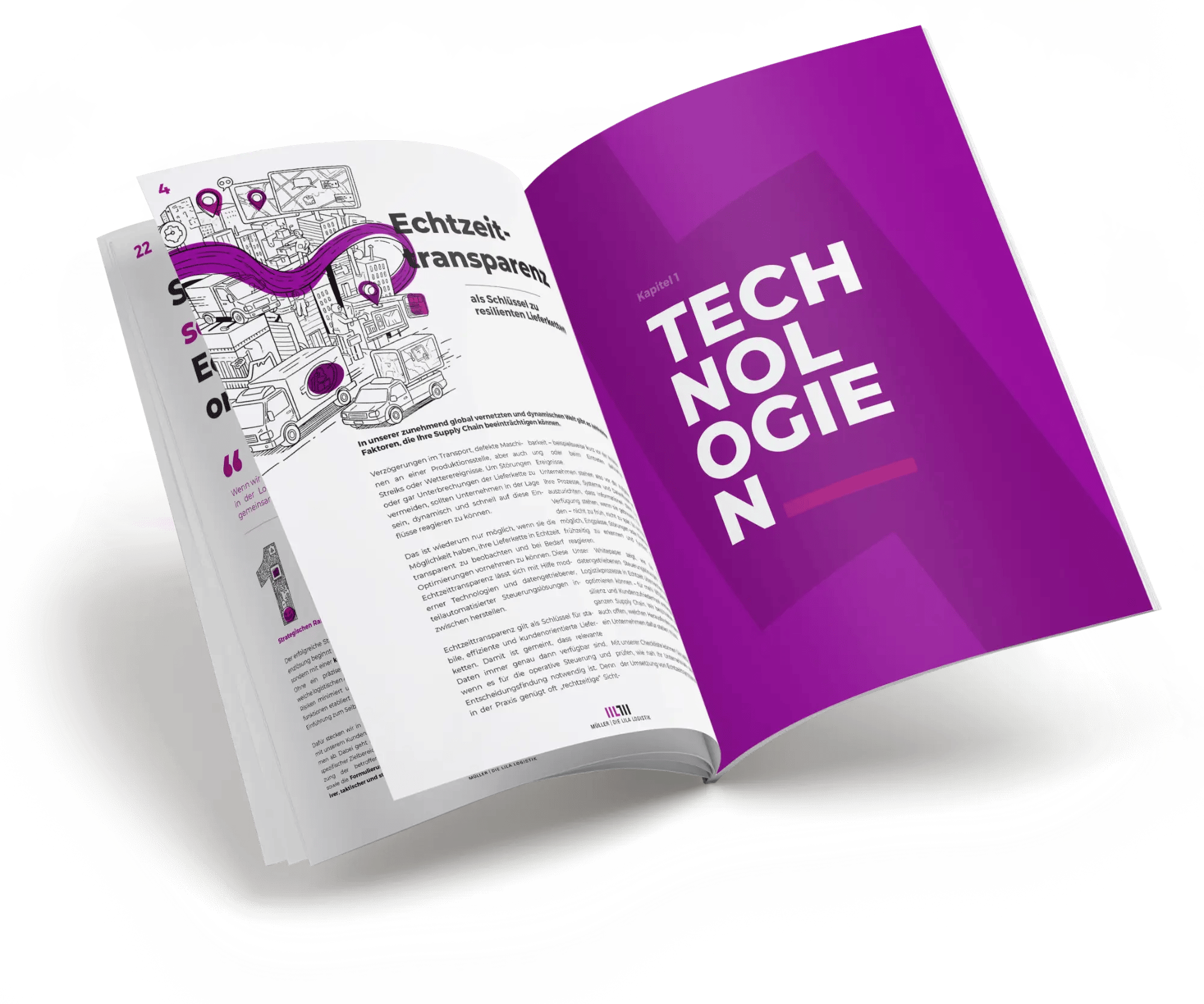
White Paper: Real-Time Transparency in Logistics—The Key to Resilient, Efficient, and Customer-Centric Supply Chains
Includes a Practical Assessment: How Transparent and Controllable Is Your Supply Chain Really?
In our white paper, discover how an integrated approach combining modern sensor technology, IoT, telematics, and data-driven control systems can help you create a comprehensive overview of your Supply Chain—for maximum transparency, responsive processes, and sustainable Supply Chain performance. Learn how real-time transparency becomes the strategic foundation for detecting disruptions early, optimally managing resources, and proactively meeting customer requirements.
Here’s what you’ll find:
- Practical insights: Substantive findings from real-world projects with industrial and retail companies
- Concrete implementation strategies: Step-by-step recommendations for introducing transparency solutions into your logistics operations
- Significant potential for optimization: How to use digital management approaches to reduce costs, minimize risks, and make processes more resilient
How Modern Technologies Are Revolutionizing Your Logistics
Real-time transparency is based on the interaction of various data sources. In addition to conventionally collected information, this includes advanced technologies that seamlessly connect the physical and digital worlds.
Key components of these technologies are:
- IoT sensors: RFID tags, GPS trackers, and temperature or condition sensors continuously provide precise data on goods, load carriers, and modes of transport.
- Telematics systems: Vehicle location, driving behavior, and energy consumption are tracked directly from the vehicles. This allows delays to be identified early on and shipments to be managed dynamically.
- Cloud platforms: Data from various sources is aggregated and processed in real time in cloud applications.
- Connectivity: 5G and locally deployed LPWAN (Low Power Wide Area Network) technologies ensure fast, stable, and energy-efficient data transmission—even in sensitive or remote logistics areas.
Using the cloud makes it possible to employ flexible control and reporting tools for data analysis and monitoring that can be accessed from anywhere. We work with a modular software framework that can be fully customized to our customers’ needs.
By consolidating and conducting expert analysis of the data, we achieve the necessary transparency regarding the situation across all links in the Supply Chain—and thus lay the foundation for data-driven control, predictive planning, and automated decision-making logic, as we apply it, for example, in our control tower solutions.

Unsere Lila Services
Operational Inbound and Outbound
Logistics
Transparent Management of Your Operational Processes: How we use real-time data to optimize your inbound and outbound processes as well as transportation management—for full transparency and greater efficiency throughout the Supply Chain.
Assembly & Value Added Services
Flexibility and Quality Thanks to Digital Process Control: How we integrate real-time information for demand-driven control to achieve maximum product quality—from Pre-assembly through quality inspection.
Data-Driven & Strategic Logistics Planning
Using data intelligence to achieve a sustainable competitive advantage: We handle the digitization and real-time management of your Supply Chain—from analysis to the implementation of customized logistics solutions.
How Real-Time Control Improves Efficiency and Availability in Practice
At LILA LOGISTIK, we support companies in implementing real-time transparency with our comprehensive industry expertise and proven methods. As explained in our white paper, digital control tools such as the Logistik-Cockpit 4.0 are key building blocks for a modern, data-driven Supply Chain.
Real-time transparency lays the foundation not only for monitoring logistics processes but also for actively and dynamically managing them. The continuous availability of status and location information makes it possible to make operational decisions based on reliable, up-to-date data.
Real-World Example: Material Availability Increased to 99.4%
A real-world example from our practice demonstrates how the use of this tool led to a sustainable increase in productivity. For one of our clients in the electronics industry—a company with 45 employees—we implemented a digital real-time control system that brought transparency to all operational processes.
Result: Holistic process optimization led to an 18% reduction in logistics personnel costs and, at the same time, an increase in material availability to 99.4%. This was achieved because continuous data synchronization and the targeted use of performance reports enabled bottlenecks in material delivery to be identified and resolved at an early stage.
In this way, we support companies not only in their digital transformation but also in sustainably increasing their efficiency and competitiveness.

“For us, real-time control means not only transparency, but also true confidence in our decision-making. When you know what’s happening at any given moment, you can think ahead instead of just reacting—that’s the key to efficiency and stability in the Supply Chain.”
- Linus Linder, Head of IT, LILA LOGISTIK

Newsletter abonnieren
Challenges in Implementing Real-Time Transparency—and How We’re Addressing Them
Achieving real-time transparency is a complex undertaking that affects many areas of a company. Implementing such a system therefore presents companies with a variety of challenges. These include:
- Technical hurdles: The system must be seamlessly integrated into the existing IT landscape.
- Data integration: Existing data sources are often highly heterogeneous and must be connected via appropriate interfaces or middleware.
- Data quality: For real-time transparency to reliably serve as a basis for decision-making, the information being consolidated must be delivered reliably and be accurate.
- Organization: New decision-making criteria and mechanisms always entail organizational changes that require thorough planning.
- Change Management: The affected staff must be guided through the upcoming changes and prepared to work with the system through training.
Structured Implementation
To address these challenges, we at LILA LOGISTIK rely on a structured, phased approach: We begin with a precise definition of objectives and individual pilot projects. At the same time, we evaluate and select the appropriate technologies.
Only then do we begin a systematic rollout, which is continuously monitored to rule out any difficulties or unexpected effects. In doing so, we pay particular attention to close coordination with the IT department and the relevant business units.
Integration into Existing IT Infrastructure
Integrating real-time transparency solutions into existing IT landscapes—which have often evolved over time—is a complex technical challenge. Many companies still rely on isolated ERP, TMS, or WMS platforms that were not designed to process high-frequency real-time data.
Our solution: We use modular middleware components and standardized interface architectures to connect the platforms in a structured yet system-agnostic manner. Specifically, we use REST APIs, EDI connections, and custom ERP connectors. In doing so, we work closely with our clients’ IT departments to ensure truly seamless process integration.
One of our key goals is to eliminate the fragmentation of data sources. Relevant information about logistics processes is often scattered across various subsystems—resulting in isolated data silos. However, for real-time transparency, it is essential to consolidate the information in a single system, validate it, and make it available.
Reliable Data Collection and Communication
Achieving real-time transparency requires extensive data collection and processing—ranging from shipment statuses and sensor readings to personal information such as driver locations or delivery times. This gives rise to demanding requirements for data protection and data security, which are strictly regulated, particularly by the provisions of the GDPR.
At the same time, it must be ensured that the data is delivered reliably and provides useful information. Common causes of data inconsistencies include erroneous sensor readings, unsynchronized interfaces, manual interventions, or differing data standards along the Supply Chain. To minimize these risks, a combination of automated plausibility checks, system-supported data harmonization, and continuous monitoring is necessary.
Keeping Costs Under Control
The implementation of real-time transparency systems requires a significant initial investment. This includes not only hardware, software, and IT integration but also the accompanying change management measures. It is therefore important for companies to systematically evaluate the project’s economic viability.
Typical cost factors include sensors, telematics, software license fees, middleware integrations, system testing, and employee training. In addition, there are ongoing costs for data management, support, and technological development. Particularly in complex supply networks with multiple locations or partners, the initial costs can rise significantly due to heterogeneous IT landscapes.
To estimate these costs early on, it is therefore important to seek out a reliable and experienced partner for implementation and to prepare and plan the rollout in several phases, so as to maintain a precise overview of the costs at all times—while also being able to estimate the specific ROI.
3 min read
Finanzielle Potenziale durch Automatisierung und Echtzeit-Optimierung in der Logistik
Müller - Die lila Logistik SE: Jul 23, 2025
FAQ – Frequently Asked Questions About
Real-Time Transparency in Logistics
-
What is meant by real-time transparency in logistics?
Real-time transparency means having continuous, up-to-date access to status and movement data throughout the entire Supply Chain, enabling companies to actively manage processes and identify bottlenecks early on.
-
What technologies are used to provide real-time transparency?
Core technologies include IoT sensors (e.g., RFID, GPS, temperature measurement), telematics systems, cloud platforms, and modern networking technologies such as 5G and LPWAN.
-
How does real-time transparency help improve efficiency?
It enables dynamic process control, reduces manual intervention, optimizes inventory and transport capacity, and minimizes errors and delays.
-
What challenges are involved in the implementation?
Integration into existing IT systems, ensuring data quality, and implementing organizational changes through training and change management are key challenges.
-
Wie lange dauert die Umsetzung eines Echtzeittransparenz-Projekts?
The project duration varies depending on its scope and complexity; however, a structured rollout with pilot phases ensures a controlled and low-risk implementation.
Efficiently Manage Logistics Processes
We provide you with the key to a resilient,
efficient, and customer-focused Supply Chain.