
Make-or-Buy in Logistics – When Does Outsourcing Make Sense?
First published June 30, 2026 What does “Make-or-Buy” mean in logistics? “Make-or-Buy” describes the decision to either provide logistics services...
Denise List
Value Added Services expand traditional logistics to include product- and production-related additional services, enabling more efficient processes, greater flexibility, and deeper integration into the value chain.
Inhaltsverzeichnis
Lade Inhaltsverzeichnis …
First published: June 30, 2026
Value Added Services (VAS) refer to additional services provided throughout logistics processes that go beyond storage, transportation, and handling. They include product-related steps such as repackaging, Pre-assembly, or quality control and are directly integrated into operational workflows.
The demands placed on logistics are constantly changing. In addition to the mere availability of goods, specific requirements regarding products, packaging, and delivery are increasingly coming into focus.
In practice, it is clear that logistics no longer ends with storage and transportation but encompasses additional services that directly contribute to value creation.
At the same time, logistics is increasingly becoming a factor that directly contributes to business value. It helps make processes more efficient, align structures more flexibly, and position companies to remain competitive in the long term.
For companies, this means, specifically:
Value Added Services are a key lever for addressing these requirements
in a structured manner.
Value Added Services encompass a wide range of additional operational services along the Supply Chain. These include, in particular:
These services are often carried out directly in the warehouse or close to production and are closely linked to operational processes.
Value Added Services expand traditional logistics to include additional process steps that directly contribute to product preparation.
This results in several concrete benefits for companies:
Standardized procedures enable the structured implementation of additional work steps. Quality controls ensure that products meet defined requirements before they move on to downstream processes.
Value Added Services can be integrated into existing logistics processes and outsourced. Companies reduce internal complexity and consolidate additional services in one place.
Shifting process steps to logistics helps reduce interfaces. At the same time, consolidating multiple services at a single location enables more efficient processing.
Products can be specifically tailored to market requirements. Additional services such as Pre-assembly or set-building help create a competitive edge.
Scalable structures make it possible to respond flexibly to fluctuations, individual customer requirements, and changing market conditions.
Value Added Services are not merely additional services; they transform the way logistics contributes to value creation.
Value Added Services are not isolated services but an integral part of integrated logistics processes.
In practice, this means:
These services are often provided directly where the other logistics processes take place.
Companies use Value Added Services strategically to adapt their logistics structures to specific requirements.
Key areas of application include:
The focus here is on the structural integration of these services into existing processes.
The implementation of Value Added Services is based on a structured approach comprising analysis, planning, and implementation. The starting point is an assessment of existing processes and requirements to identify suitable value-added services within the value chain. Building on this, integrated logistics concepts are developed that clearly define processes, interfaces, and responsibilities.
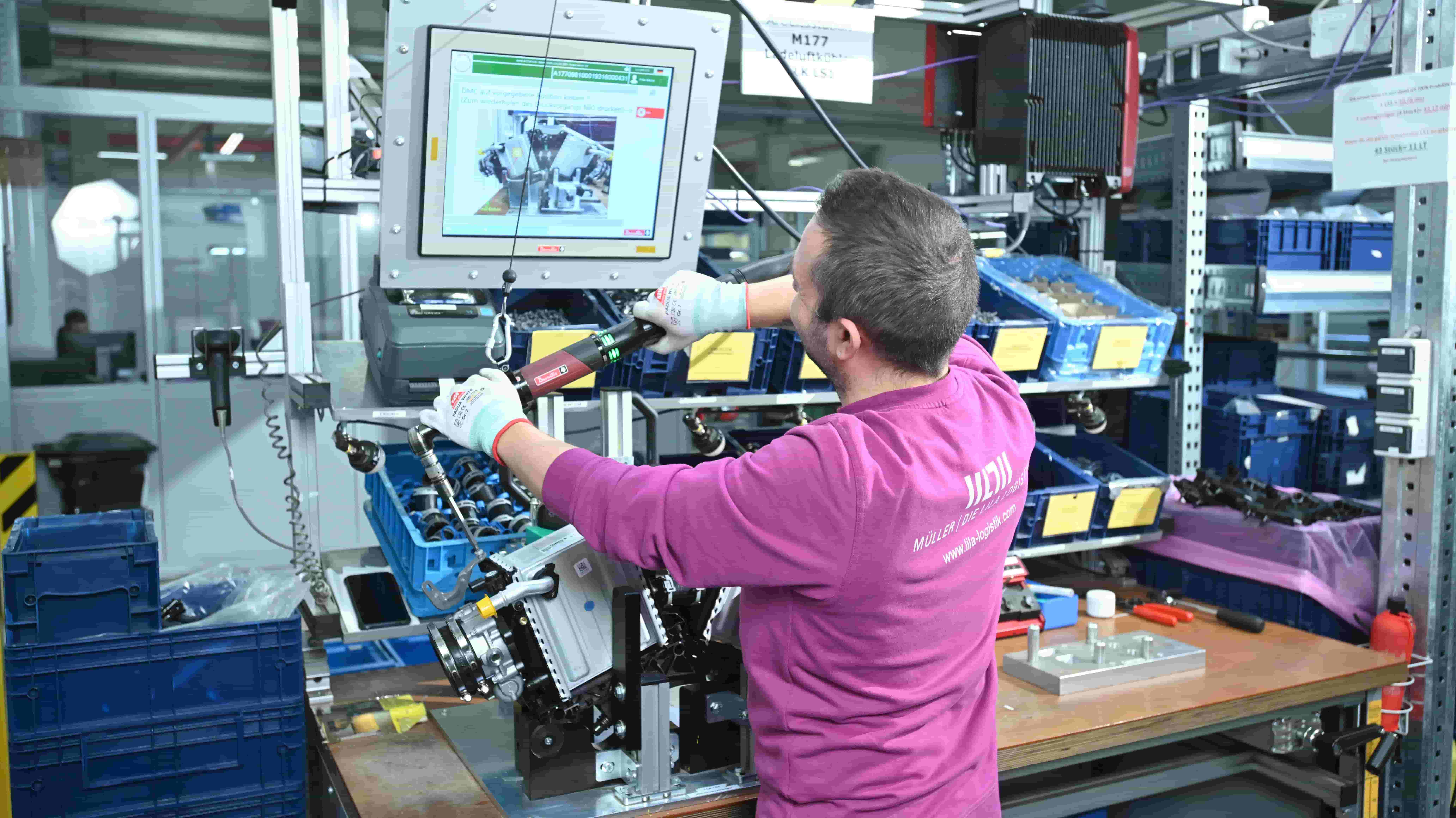
Implementation is carried out by trained teams directly within the existing logistics structures. The goal is to seamlessly integrate value-added services into operational processes, thereby ensuring end-to-end, structured handling throughout the Supply Chain.
Value Added Services expand logistics to include additional services that are directly linked to products. In doing so, they shift part of the value creation to logistics and change the requirements for processes, organization, and management.
Value Added Services are additional services that go beyond traditional logistics processes such as transportation and warehousing. They directly handle products and prepare them for subsequent steps in the process, such as production, sales, or shipping.
Value Added Services include a wide range of product-related additional services. These include repackaging, labeling, Pre-assembly, quality control, as well as set-building and sequencing.
In addition, Value Added Services also include Returns management, spare parts logistics, returnable container management, reconditioning services, customs clearance, and other services and ancillary services throughout the Supply Chain.
Value Added Services are typically provided directly where the operational logistics processes take place—for example, at warehouse locations or in logistics areas adjacent to production facilities.
The advantage is that additional process steps can be integrated directly into existing workflows. This results in fewer interfaces, shorter distances, and better coordination between the individual process steps.
Value Added Services enable companies to integrate additional services into their logistics operations in a targeted manner. This allows processes to be consolidated, costs to be reduced, and products to be tailored to specific requirements.
They help increase efficiency, reduce complexity, and enhance flexibility in the Supply Chain.
Traditional logistics services include transportation, warehousing, and handling. Value Added Services go beyond these and supplement them with additional steps involving the product itself.
They expand logistics to include functions that directly contribute to value creation.
Head of Content & Communications
Sprechen Sie persönlich mit uns über Ihre Bedürfnisse
oder informieren Sie sich weiter über unsere Leistungen
First published June 30, 2026 What does “Make-or-Buy” mean in logistics? “Make-or-Buy” describes the decision to either provide logistics services...
First published: November 28, 2023 Plant logistics plays a crucial role in the manufacturing industry. Efficient warehousing and materials management...
First published: April 4, 2024 In the automotive industry, everything revolves around precision, efficiency, and reliability. To meet the demands of...